NEMO
Group Participation Service

Team Project Apr 2025 - Jul 2025
Cloud 2 Backend 1 Frontend 1 AI 2

Kakao Tech Bootcamp team project. Built and evolved the entire cloud infrastructure from a single VM to a fully orchestrated Kubernetes environment on AWS EKS with GitOps-based CI/CD pipeline.

Key Features

Category Filtering & Search

Category-based group filtering and keyword search
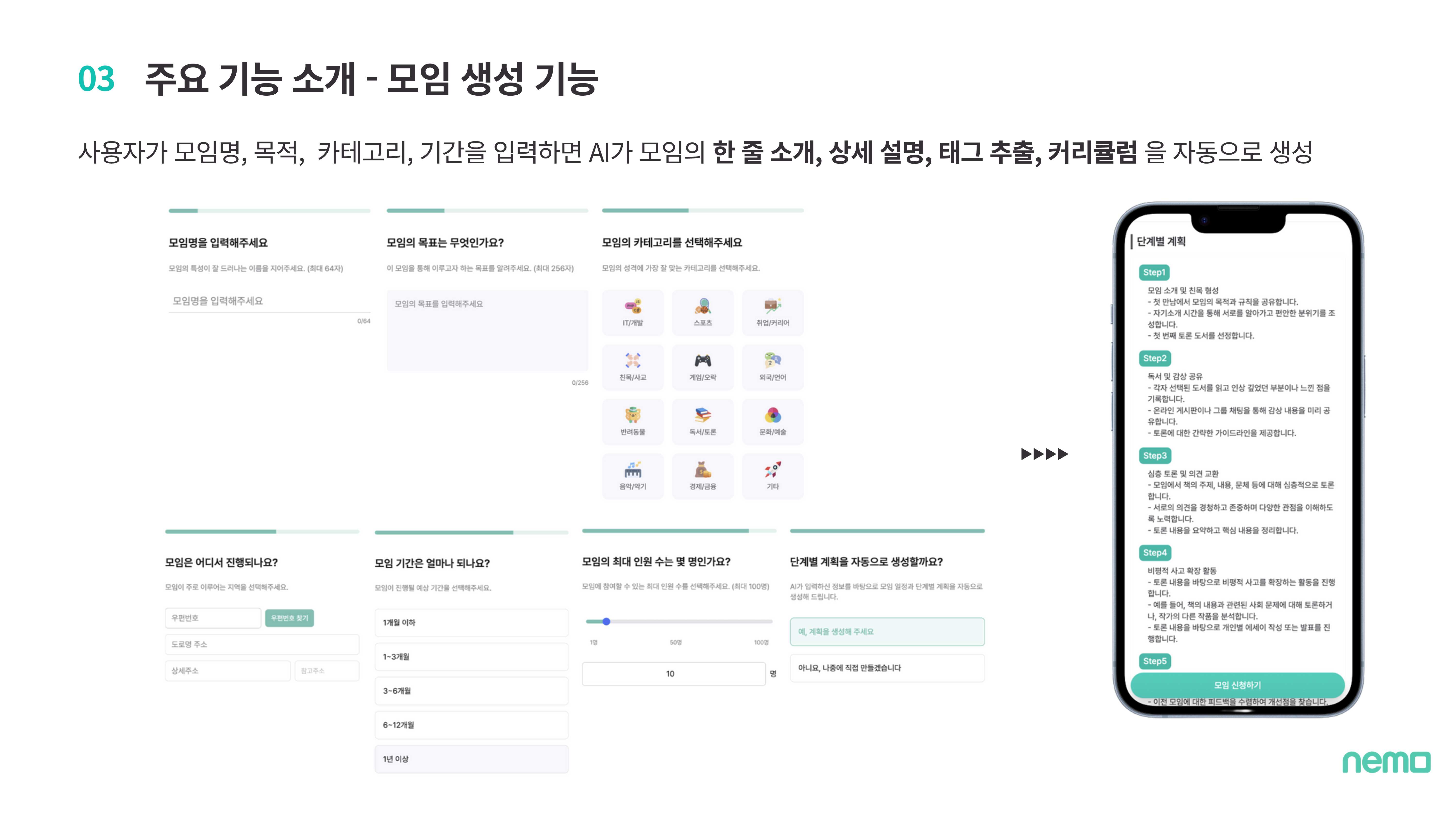
AI-Powered Group Creation

AI auto-generates group descriptions, tags, and curriculum from user inputs
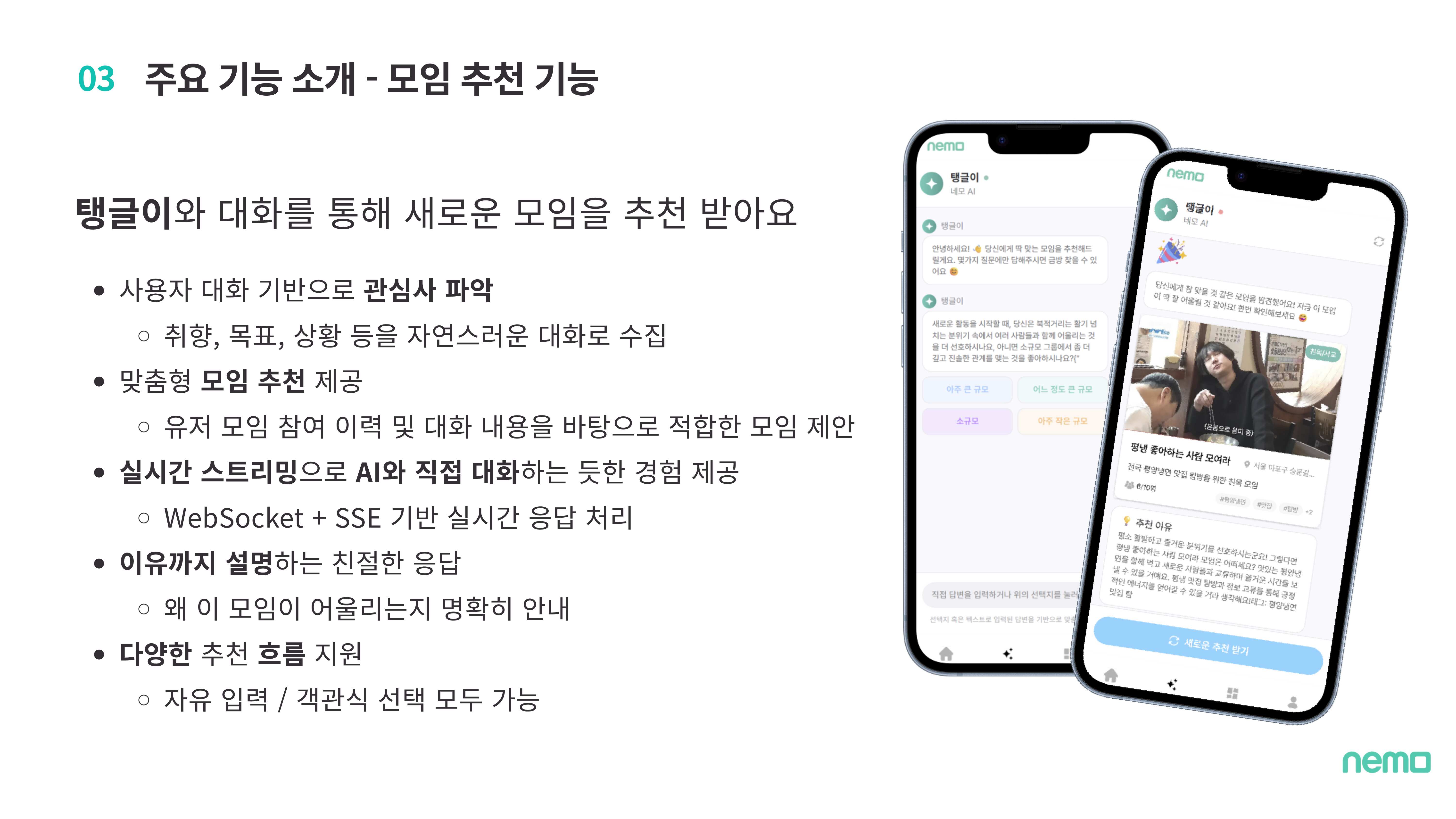
AI Chatbot Recommendation

Conversational AI chatbot recommends groups based on user interests

Tech Stack (My Part)

AWS EKS Terraform Docker Kubernetes Helm ArgoCD GitHub Actions SigNoz K6 Wireguard Next.js Spring Boot Redis Kafka WebSocket SSE

My Contributions

Architecture Evolution (3 Phases)

PM2 manual deploy → Docker + CI/CD → EKS + ArgoCD GitOps

AWS EKS & Container Orchestration

Cluster setup with Helm-based deployment for all microservices

GitOps CI/CD Pipeline

GitHub Actions + ArgoCD for fully automated deployment

Messaging & AI Infrastructure

Redis, Kafka setup and vLLM-based Vertex AI model serving

Monitoring & Security

K6 + SigNoz load testing, Wireguard VPN, Netdata monitoring

Security Incident Response

Real Production Incident
Scanning Attack Detected on Production Server
2025.05.15 19:40 KST — Netdata Real-time Monitoring Alert

During the V1 deployment phase, the production server was running on a Public Subnet with all services directly exposed to the internet. A malicious scanning attack was detected through Netdata's Nginx web log monitoring, triggering critical alerts with 100% bad requests and 0% successful requests.

1. Detection — Netdata Discord Alert

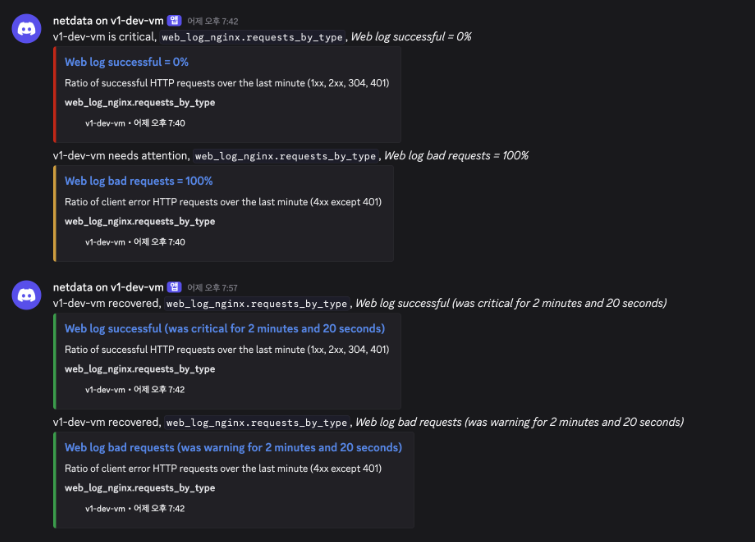
Netdata monitoring agent on the GCP VM detected an anomaly in Nginx web log metrics. Discord webhook fired a CRITICAL alert: "Web log successful = 0%" and "Web log bad requests = 100%".

Discord Netdata Alert

Discord alert from Netdata - Critical notification

2. Analysis — Nginx Access Logs & Netdata Dashboard

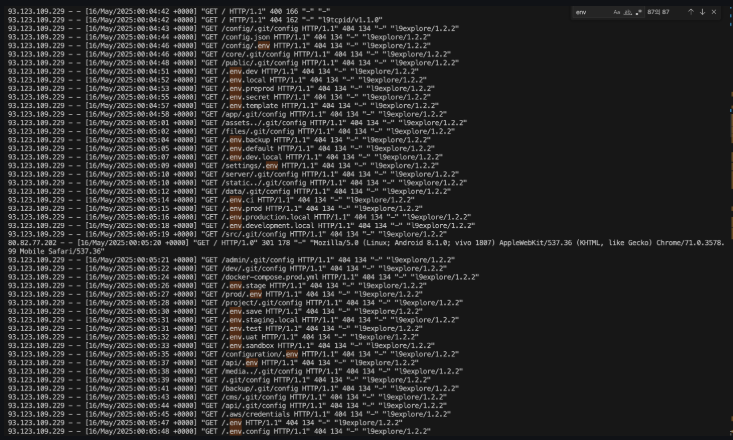
Investigated the Nginx access logs and confirmed a targeted scanning attack. The attacker was systematically probing for sensitive files — particularly .env files containing database credentials, API keys, and secret tokens. Requests like GET /.env, GET /api/.env were flooding the server, attempting to exfiltrate environment variables and secrets.

Nginx Access Logs

Nginx access logs — .env exfiltration attempts detected

Netdata Dashboard

Netdata dashboard - request spike and error rates

3. Resolution — Private Subnet + WireGuard VPN

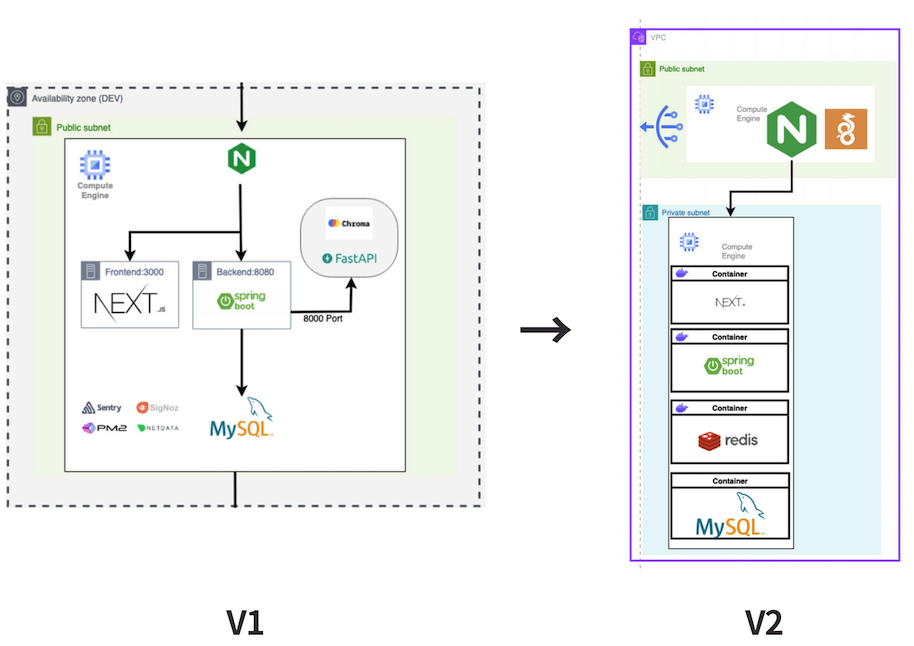
Redesigned the network architecture from V1 to V2. Moved all backend services (Next.js, Spring Boot, Redis, MySQL) from the Public Subnet to a Private Subnet. Only Nginx reverse proxy remained in the public subnet. Introduced WireGuard VPN for secure developer access to internal services.

Architecture V1 to V2 - Private Subnet Migration

V1 (Public Subnet, all exposed) → V2 (Private Subnet + WireGuard VPN)

4. Result

After migrating to Private Subnet with WireGuard VPN, the attack surface was completely eliminated. Internal services are no longer accessible from the public internet. Only the Nginx reverse proxy handles external traffic, and all developer/admin access goes through the encrypted WireGuard tunnel. No further scanning incidents were detected.

Architecture Evolution

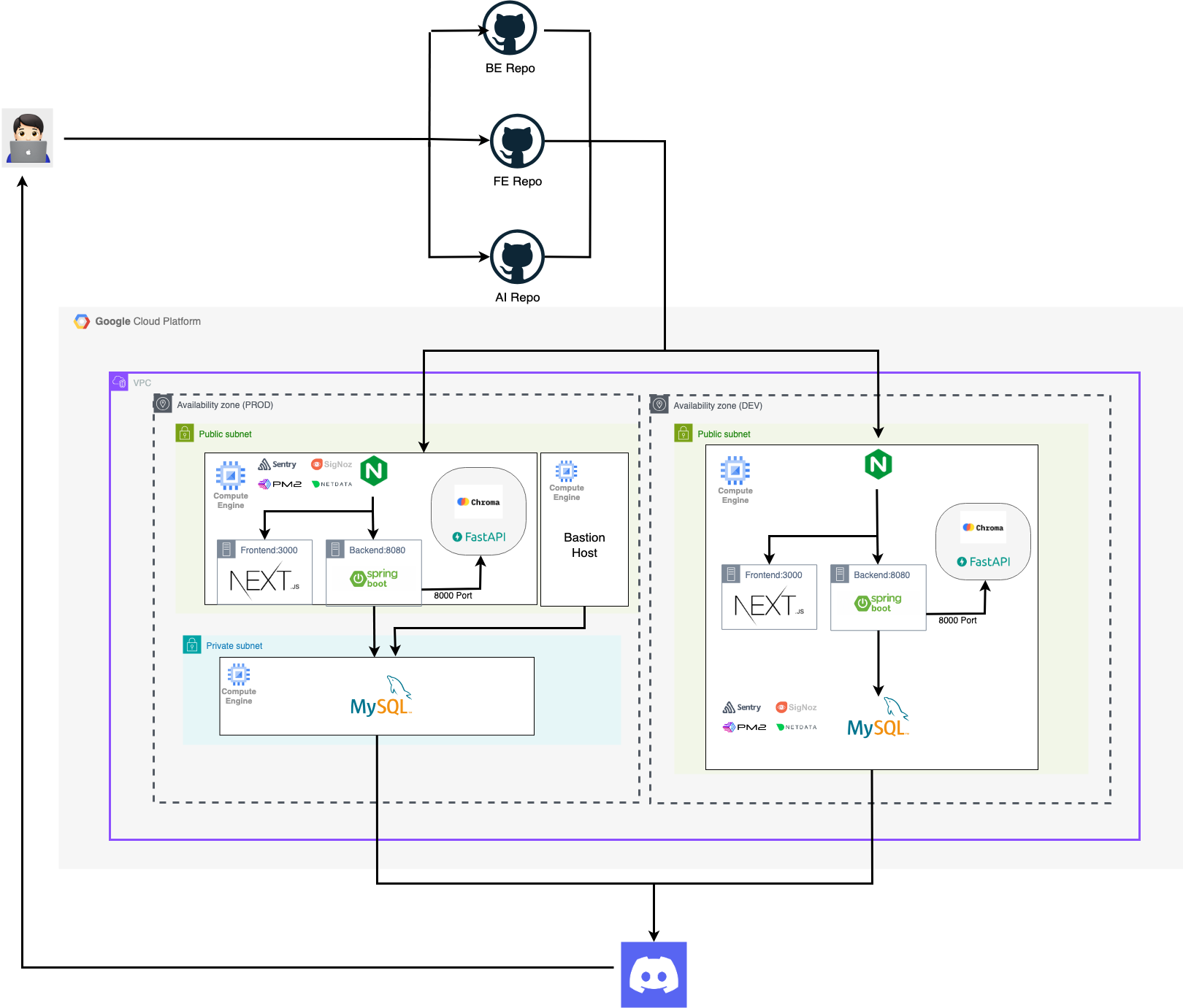
Architecture v1

Phase 1: PM2 Manual Deployment on GCP VM

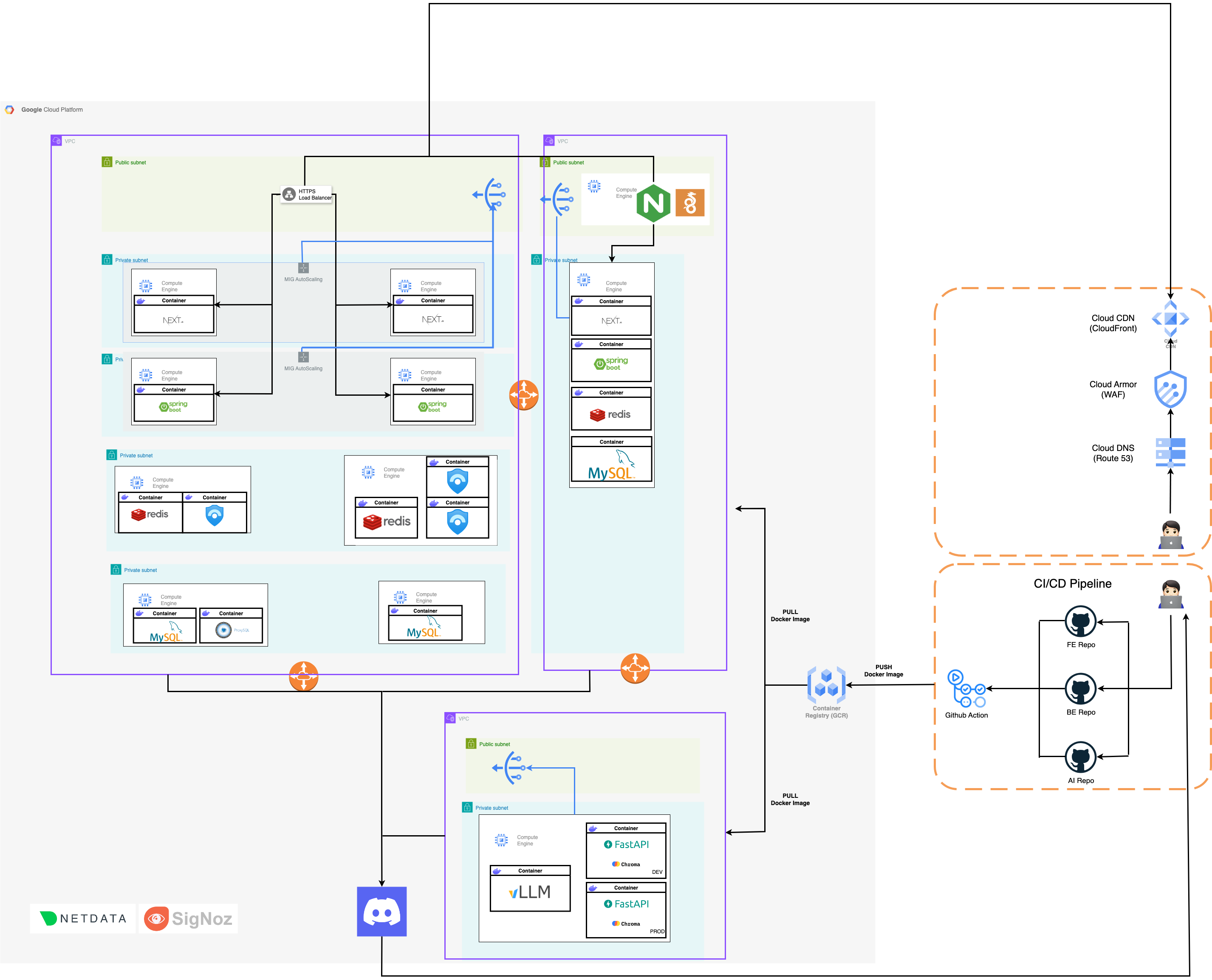
Architecture v2

Phase 2: Docker + GitHub Actions CI/CD

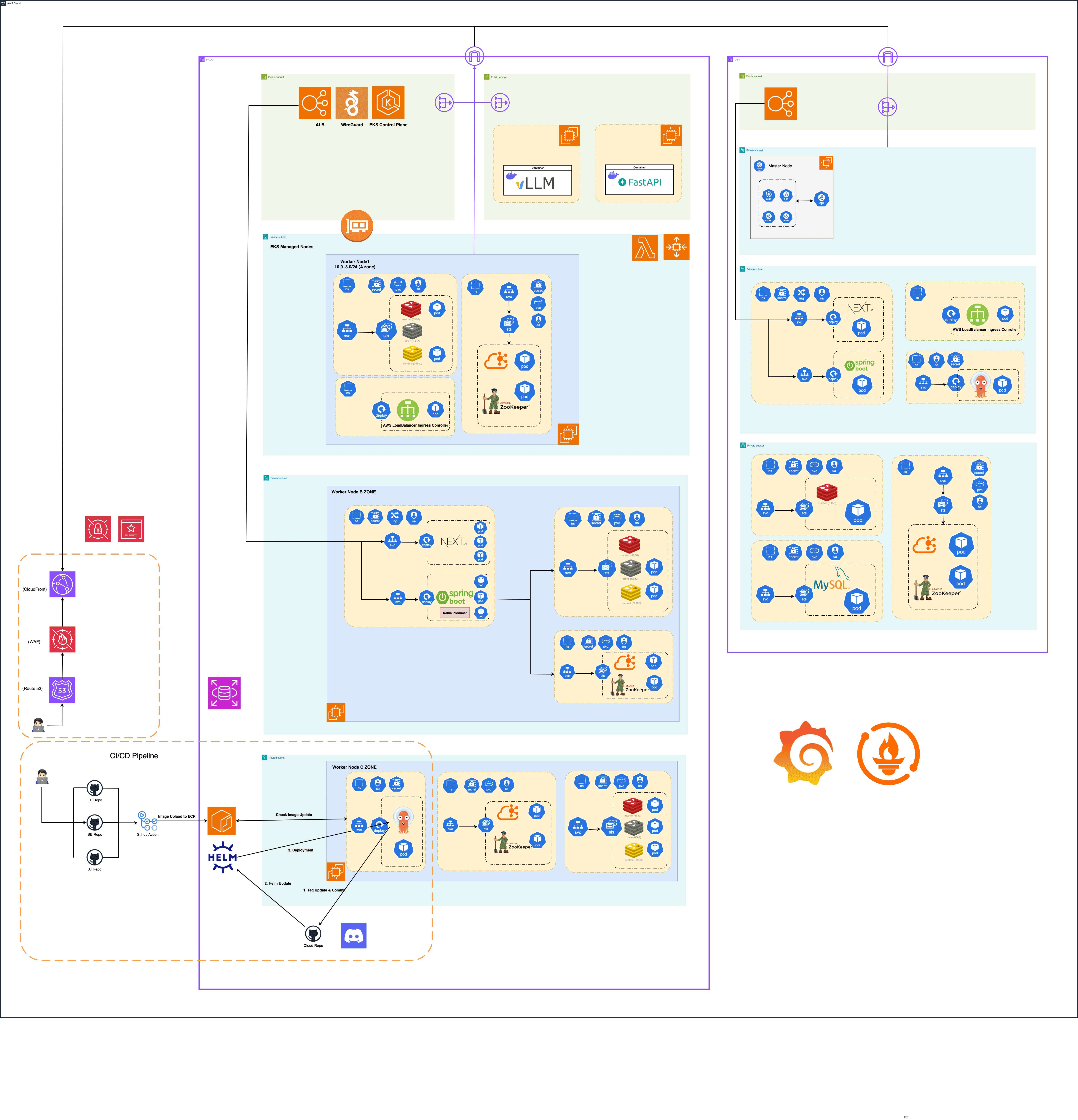
Architecture v3

Phase 3: AWS EKS + ArgoCD GitOps